Microneedling at home - is it safe and does it really work?
Home dermapen devices, dermarollers and “microneedling at home” regularly appear on social media as a simple way to improve skin condition without visiting a clinic. The devices can be bought online, and videos showing self-needling of the face often make it look as easy as applying serum or doing a peel.
The shortest answer
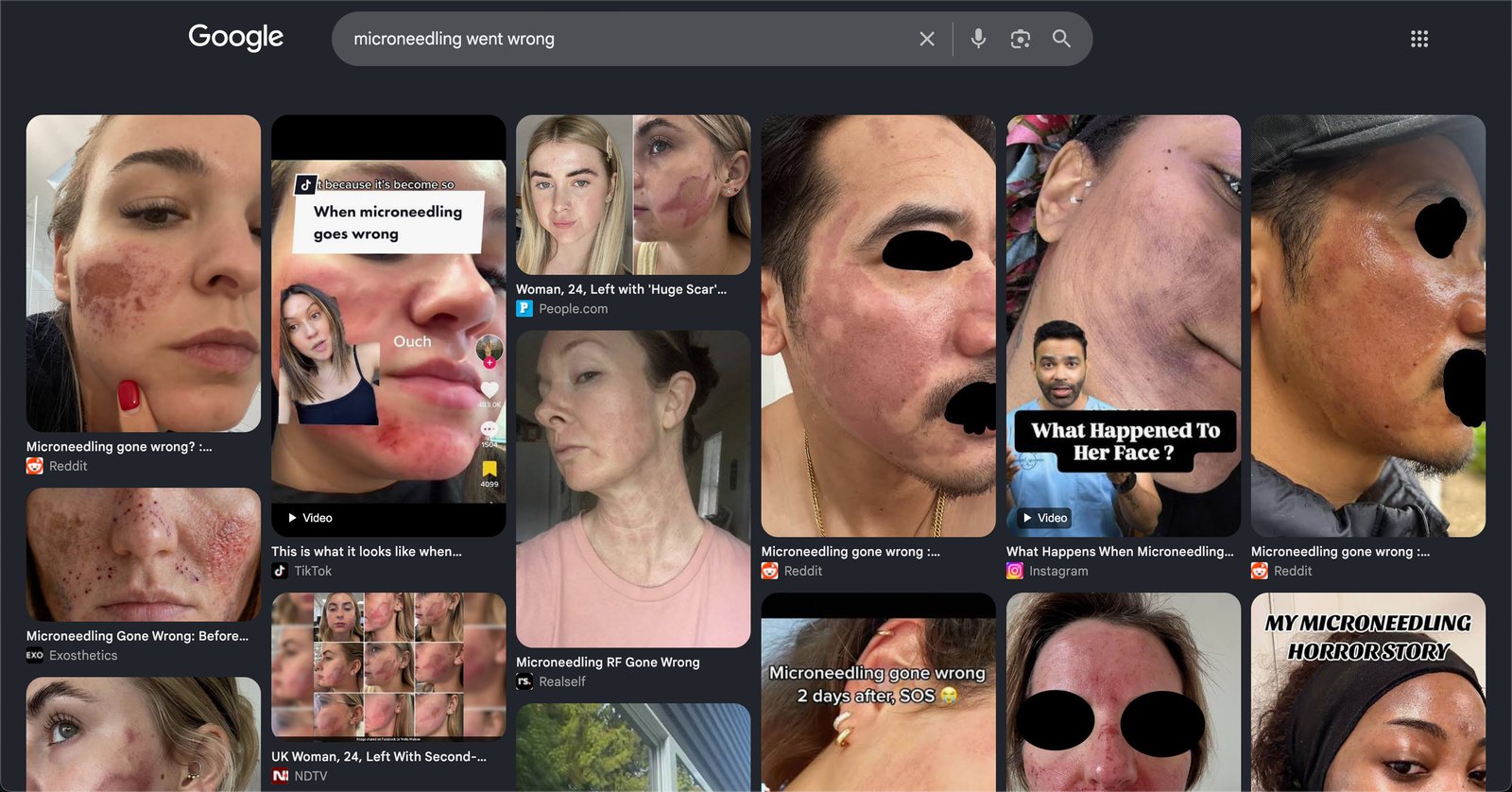
In practice, the situation is more complicated. Microneedling is not an ordinary step of home skincare. If needles truly penetrate living tissue, controlled skin injury occurs. This activation of repair processes is what makes professional microneedling work, but it also means a risk of irritation, infection, pigmentation disorders or scarring when performed incorrectly.
So does microneedling at home make sense? How is a home dermaroller different from a professionally performed treatment, and where is the line between skincare and a procedure that requires knowledge and experience?
A home dermapen does not replace professional assessment.
What exactly is microneedling?
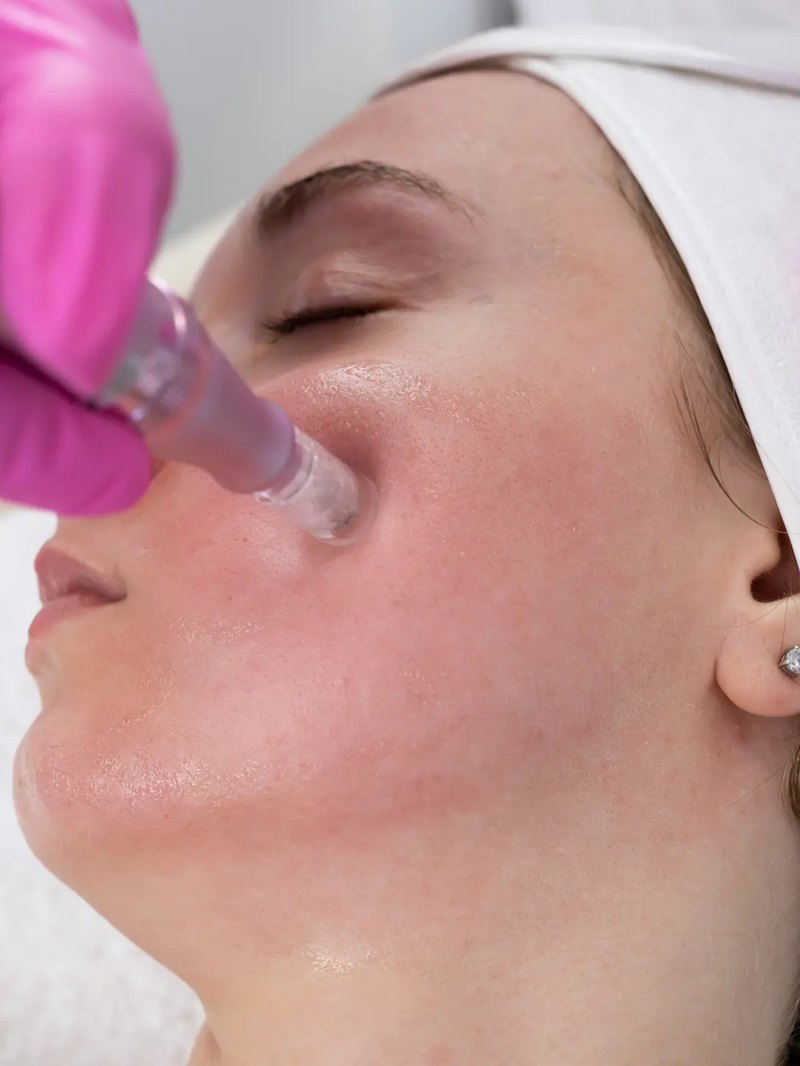
Microneedling, also called microneedling therapy, consists of making numerous micro-punctures in the skin. In controlled conditions, these micro-injuries initiate healing and tissue remodeling processes, including collagen production.
This is why microneedling is used, among other things, in therapies aimed at improving the appearance of acne scars, fine lines and skin texture. The effectiveness of microneedling for acne scars has also been assessed in clinical studies and meta-analyses.
However, this does not mean that every micro-needle device and every method of use produces the same effect.
The key factors include:
the depth and method of puncturing,
the treated area,
skin condition and skin type,
hygiene and sterility of elements that touch the skin,
treatment frequency,
proper qualification for the procedure,
skincare before and after microneedling.
This is why professional microneedling should not be equated with every home device described online as a “dermapen”.
Microneedling at home - dermaroller or dermapen?
Two types of devices are most often chosen for self-needling.
Dermaroller
A dermaroller is a roller equipped with many small needles. When the device is moved over the face, the needles come into contact with the skin.
Its popularity comes mainly from its low price and easy availability. However, the roller construction means that the way the needle contacts the skin differs from the vertical movement of needles characteristic of pen-type devices.
Dermapen
A pen-type device uses vertically moving needles. Professional devices may allow treatment parameters to be controlled, including penetration depth.
And this is where a very important distinction appears.
A device bought for home use and a professional device used during treatment should not be treated as equivalent products just because both look similar and use needles.
The FDA notes that some products intended for home use have very short needles that act mainly superficially. Devices that penetrate deeper skin layers may reach living cells, blood vessels and nerve endings. As the depth of intervention changes, not only the potential effect changes, but also the level of risk.
Myth or fact? Common beliefs about microneedling
❌ Myth: The deeper the punctures, the better the effects.
✅ Fact: Needle depth should be adjusted to the skin problem. Overly aggressive needling increases the risk of irritation, pigmentation and scarring, and does not guarantee a better result.
❌ Myth: Any serum can be used during microneedling.
✅ Fact: Not every cosmetic is intended to be applied through micro-punctures. Granulomatous reactions have been described after the use of some preparations, including vitamin C.
❌ Myth: A dermapen bought online works the same as a device in a clinic.
✅ Fact: Home devices and professional equipment differ in construction, regulation options and intended use. Treatment effectiveness depends not only on the device, but also on patient qualification, technique and the experience of the person performing the procedure.
❌ Myth: After treatment, it is good to apply as many active cosmetics as possible.
✅ Fact: Immediately after microneedling, the skin is more susceptible to external substances. Not all cosmetics are safe to use after treatment, so it is worth following the recommendations of the device manufacturer or a specialist.
❌ Myth: Microneedling is suitable for everyone.
✅ Fact: The treatment has contraindications, including active skin infections, cold sores, some dermatological diseases and a tendency to abnormal healing. Before starting therapy, the skin condition should be assessed.
❌ Myth: One treatment will solve all skin problems.
✅ Fact: Visible effects usually require a properly planned therapy and appropriate skincare. The number of treatments depends on the skin problem and expected result.
Does a home dermapen give the same results as a professional treatment?
This is one of the most important questions asked by people considering microneedling at home.
The short answer is: you should not expect the same results.
The American Academy of Dermatology indicates that products intended for at-home microneedling are gentler, which is why the results achieved with them are less visible than with professional microneedling.
And this is logical. If a device intended for a person without professional training allowed deep punctures of the skin without limitations, the risk of incorrect use would be much greater.
A home device may therefore serve a completely different function than a professional treatment.
In my everyday work, I often meet people who have previously done microneedling by themselves at home. Most often, the problem does not come from the device itself, but from incorrect technique, too much pressure or making punctures too deep in the belief that it will bring a better result. In practice, this very often leads only to stronger skin irritation. More does not mean better here.
7 most common mistakes when doing microneedling at home
1. Believing that stronger needling gives a better effect
Redness or bleeding should not be treated as a measure of treatment effectiveness. Excessive skin damage may increase the risk of complications instead of improving the result.
2. Poor hygiene
During microneedling, the natural protective barrier of the skin is disrupted. An improperly cleaned device may increase the risk of infection.
Sharing devices is particularly dangerous. Microneedling products should not be used by several people.
3. Reusing worn elements
In professional procedures, a single-use sterile cartridge intended for a specific person and a specific treatment is extremely important. Reusing a needle cartridge increases the risk of infection, and worn or damaged needles may additionally traumatize the skin.
4. Needling active lesions
Active inflammation, infection, cold sores or damaged skin should be a red flag. Microneedling is not suitable for every skin type and every moment.
5. Doing the treatment too often
The skin needs time to regenerate. Repeating the treatment only because the redness has disappeared does not mean that repair processes have finished.
6. Applying random cosmetics immediately after needling
This is one of the most underestimated problems.
A cosmetic that is well tolerated by intact skin does not have to behave the same way after thousands of micro-punctures have been made. The FDA emphasizes that the safety of combining microneedling devices with various cosmetics, medicines or other substances is not automatically confirmed.
That is why the popular online rule “I will do dermapen and then apply my favorite serum” is not a good way to qualify a product for use during microneedling.
7. Lack of proper aftercare
After microneedling, the skin may be more sensitive both to sunlight and to cosmetic ingredients. Immediately after treatment is therefore not a good time to experiment with intensive active ingredients.
Not sure where to start? Book a cosmetic consultation, which is completely free if you decide to have any treatment during the same visit!
What side effects are possible?
Overly aggressive or unhygienic microneedling may lead to strong irritation, pigmentation changes, inflammation or longer skin recovery.
After correctly performed professional microneedling, temporary reactions may occur, such as redness, tightness, dryness, peeling or discomfort.
However, rarer complications also exist. The described risks include, among others:
infection,
pigmentation changes,
reactivation of cold sores,
prolonged irritation,
unwanted changes in skin texture,
scarring in the case of skin damage.
This is why treatment safety cannot be assessed only by whether “everything looks fine” immediately after it is performed.
When should you not experiment with microneedling at home?
People with active infections and skin lesions, healing disorders, a tendency to keloids, certain dermatological and systemic diseases, and people taking medications that may affect treatment safety should be particularly careful.
If you are not sure whether the condition of your skin allows microneedling, a consultation with a specialist is a more reasonable solution than experimenting on your own.
Microneedling at home is not simply a cheaper version of the same treatment. Depending on the device and how it is used, it may be a much more superficial form of skincare or an attempt to perform a procedure on your own that requires proper qualification, hygiene and parameter control.
Is a professional treatment always a better solution?
It depends on the goal you want to achieve.
If you only want gentle skin refreshment and support for daily skincare, appropriately used devices intended for home use may be part of a skincare routine. However, you should not expect them to replace a professional treatment performed by a cosmetologist.
The situation is different when the problem is:
acne scars,
loss of skin firmness,
enlarged pores,
uneven skin texture,
fine lines,
signs of photoaging.
In such cases, not only the device itself matters, but above all proper qualification for the treatment, parameter selection and the experience of the person performing the procedure.
Why is consultation before treatment so important?
One of the biggest mistakes made by people doing microneedling at home is assuming that every skin will react in the same way.
Meanwhile, even people of a similar age may require completely different approaches.
During consultation, the cosmetologist assesses, among other things:
the current skin condition,
the degree of dehydration,
sensitivity level,
presence of inflammation,
contraindications to the treatment,
expected effects.
This makes it possible to choose a therapy that is not only effective, but also safe.
How to prepare the skin for microneedling?
Regardless of whether a treatment performed in a clinic or home skincare using devices intended for personal use is planned, it is worth taking care of proper skin preparation.
The most important rules are:
thorough skin cleansing,
avoiding tanning before treatment,
proper hydration,
avoiding aggressive peels directly before microneedling,
following specialist recommendations.
Aftercare
After microneedling, the skin needs time to regenerate.
In the first days, it is worth:
using gentle skincare products,
regularly moisturizing the skin,
protecting the skin from UV radiation,
avoiding sauna and swimming pool,
giving up intensive peels.
Proper aftercare often determines the final effect of the therapy.
Summary
Microneedling at home may seem like a simple way to improve the appearance of the skin, but it is worth remembering that microneedling is not an ordinary skincare procedure. Effectiveness and safety depend on many factors - the type of device, technique, hygiene and proper qualification.
If you want visible improvement in skin firmness, reduction of acne scars, wrinkles or improvement in skin texture, it is worth consulting a cosmetologist and choosing a therapy suited to your skin needs.
Professionally performed microneedling not only increases treatment safety, but also makes it possible to adjust parameters to a specific problem and expected effects.
👉 If you are looking for professional microneedling in Krakow, read the treatment description on our website and book a cosmetic consultation. Together, we will choose the therapy best suited to your skin needs.
Frequently asked questions
Does microneedling therapy hurt?
Most people feel only mild discomfort. The intensity depends on individual skin sensitivity and needle depth.
How long does redness last?
Most often from a few hours to two days, although in people with sensitive skin it may last a little longer.
Can microneedling be done in summer?
Yes, but it requires special sun protection and following aftercare recommendations.
Is one treatment enough?
In professional therapies, the best effects are usually achieved after a series of treatments selected individually for the needs of the skin.
Does microneedling help with pigmentation?
It may support improvement in the appearance of some pigmentation changes, but the method of therapy should be chosen individually.
Does a dermapen from a drugstore work?
Home devices available in drugstores may support everyday skincare, but they do not replace professional microneedling performed in a clinic. They usually use shorter needles and work more superficially, so the effects are much less visible.
Can retinol be used?
Retinol is not recommended directly before or after microneedling. It may additionally irritate the skin and increase the risk of damaging the protective barrier. Skincare after treatment is best reintroduced gradually, according to specialist recommendations.
Does microneedling hurt?
Sensations are very individual. Most people describe the treatment as slightly unpleasant, but well tolerated. In clinics, numbing cream is often used before deeper microneedling, which makes the treatment much more comfortable.
How to disinfect a roller?
The roller should be cleaned and disinfected according to the manufacturer’s instructions before and after each use. It should never be used on uncleansed skin or shared with other people, because this increases the risk of infection.
Can the treatment be done during pregnancy?
During pregnancy and breastfeeding, microneedling is not recommended without prior consultation with the attending physician and the specialist performing the treatment. During this time, the safety of mother and baby should always be the highest priority.
How often should microneedling be done?
Treatment frequency depends on skin type, therapy goal and micro-puncture depth. Doing the treatment too often will not speed up results and may prolong recovery and increase the risk of irritation. The therapy plan is best set individually.
What serum should be used after microneedling?
After treatment, it is best to choose products intended for post-microneedling care. Random cosmetics containing strongly irritating active ingredients should be avoided, because not all of them are safe after the skin barrier has been disrupted.
What to do after microneedling?
For the first days after treatment, it is worth gently cleansing the skin, moisturizing it regularly, using high SPF cream and avoiding sauna, swimming pool, intense physical effort and cosmetics containing retinol or acids. Proper aftercare has a major impact on healing comfort and the final therapy effect.